
The milu has reverted to its Chinese name "MiLu" in the West
On November 27, this reporter learned from the Shishou Tian'ezhou Wetland Milu National Nature Reserve during an event commemorating the 40th anniversary of milu's return to China that, as a core stronghold for milu conservation in China, the reserve has achieved a remarkable leap from 64 to over 4,500 individuals, creating a globally acclaimed conservation legend. Additionally, the name "milu" will no longer be referred to by its English designation "Pere David's Deer" but will instead adopt the Chinese phonetic transliteration "MiLu". After 40 years of returning "home", the milu has reclaimed its Chinese name in the West.
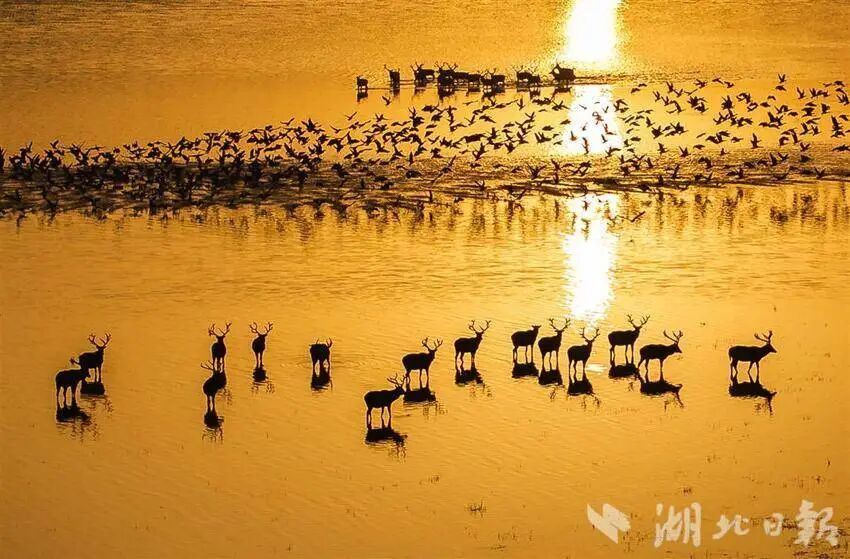
The milu, also known as the "Four-not-like" due to its unique appearance, is a species endemic to China. After becoming extinct in China during the late Qing Dynasty, only a small number of individuals were transported to Europe for captive breeding.
Researcher Meng Qinghui from the Beijing Milu Ecological Experiment Center noted that the character "麋" appeared in Shang Dynasty oracle bone inscriptions, and the species is documented in classical works such as Mencius, Book of Rites, and Compendium of Materia Medica. In 1865, French botanist-zoologist Armand David first described the Chinese milu to the Western scientific community, which was subsequently recognized as a new species and named "Pere David's Deer".
In the late 19th and early 20th centuries, milu were transported to European zoos by foreigners, leading to the extinction of milu in China. The 11th Duke of Bedford purchased the remaining 18 milu from zoos in Paris, Berlin, and other cities, and housed them at Woburn Abbey in London. In 1985, China and the UK signed a milu reintroduction agreement, and 22 milu returned to their homeland. Later, the Shishou Milu Nature Reserve was established, introducing 64 milu from Beijing. In 1991, the Hubei Provincial Government approved the establishment of the Shishou Tian'ezhou Wetland Milu Nature Reserve. Between 1993 and 1994, the 64 milu were relocated from Beijing to Hubei in succession.
After decades of cultivation, Shishou Milu National Nature Reserve has developed from 64 initially introduced Milu to more than 4500, of which more than 1600 are scattered in the wild, forming the largest and most dynamic wild Milu population in the world.
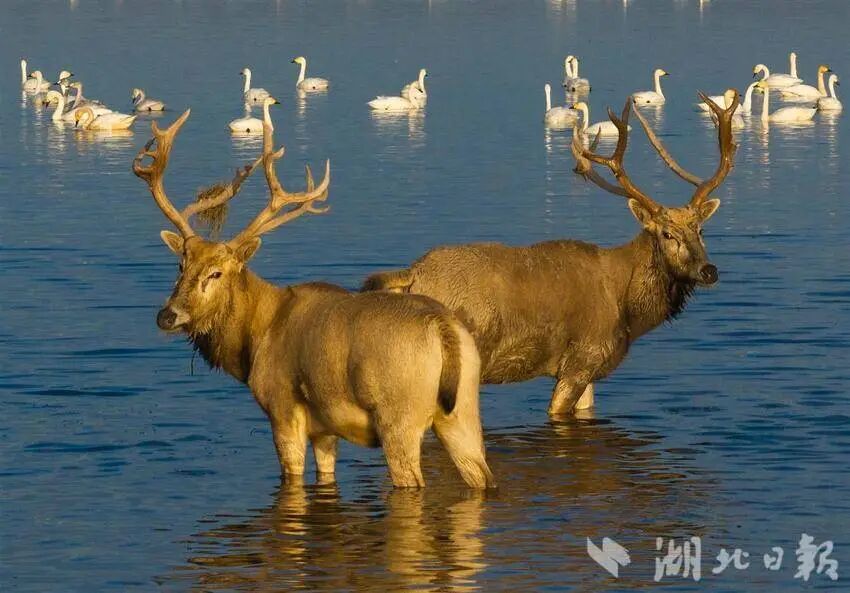
Currently, the core population in the reserve has reached 2,901 individuals, while the wild population has spread to more than ten counties and urban districts across Hubei and Hunan provinces, forming four natural populations in Shishou Sanheyuan, Yangbotan, Jianli Tu'erzhou, and Hunan Dongting Lake.

Yang Guoxiang, Secretary of the Shishou Milu National Nature Reserve, stated that the local authorities have reclaimed 23,000 mu of land to create a habitat closely resembling the natural wild environment for milu. Professor John Mackinnon from the University of Kent, UK, made two visits to the Shishou Reserve and observed the excellent restoration of milu's wild nature, for which he expressed high praise. During their discussions, he consistently used the term "Milu" to refer to the species.
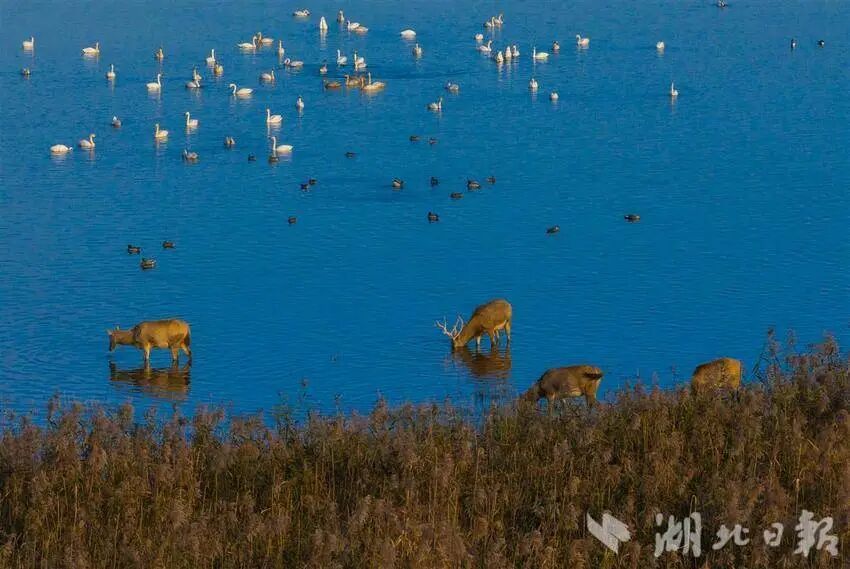
Meng Qinghui stated that a Chinese milu researcher once used "Milu" in a paper submitted to an international journal. During the review process, the reviewer expressed confusion about the term "Milu". After the researcher explained its origin and significance, the reviewer readily accepted the term and replied, "To maintain academic continuity, please use 'Milu' again in future submissions."
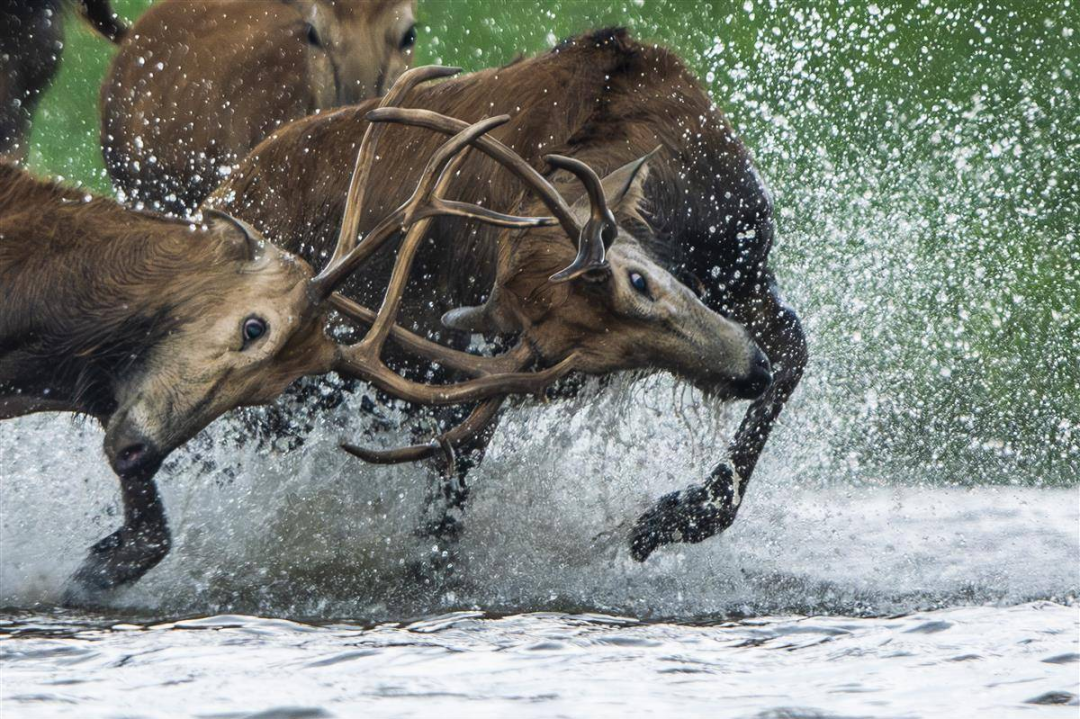
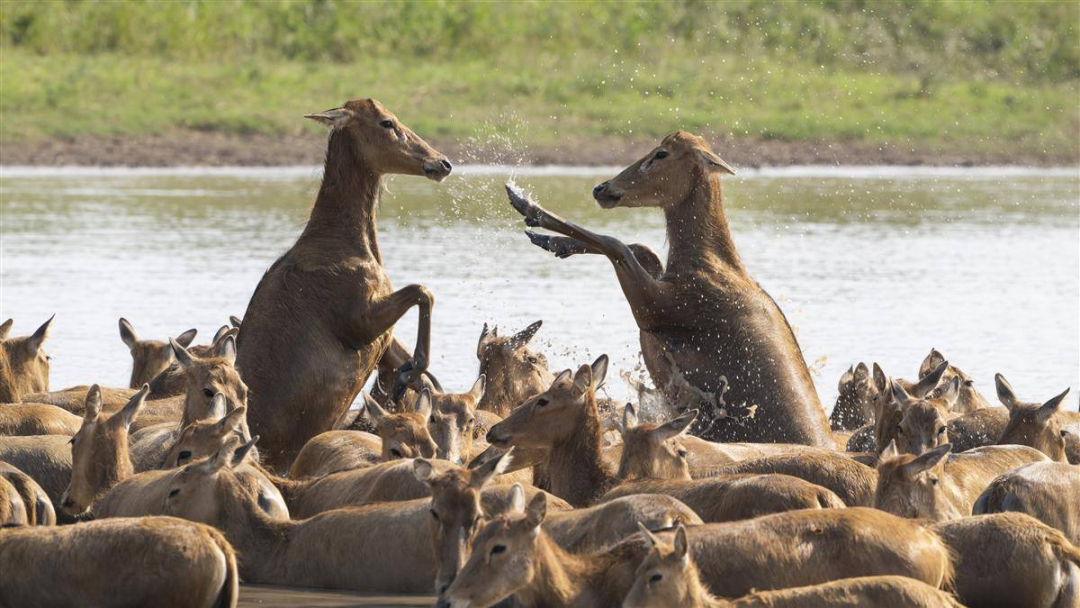
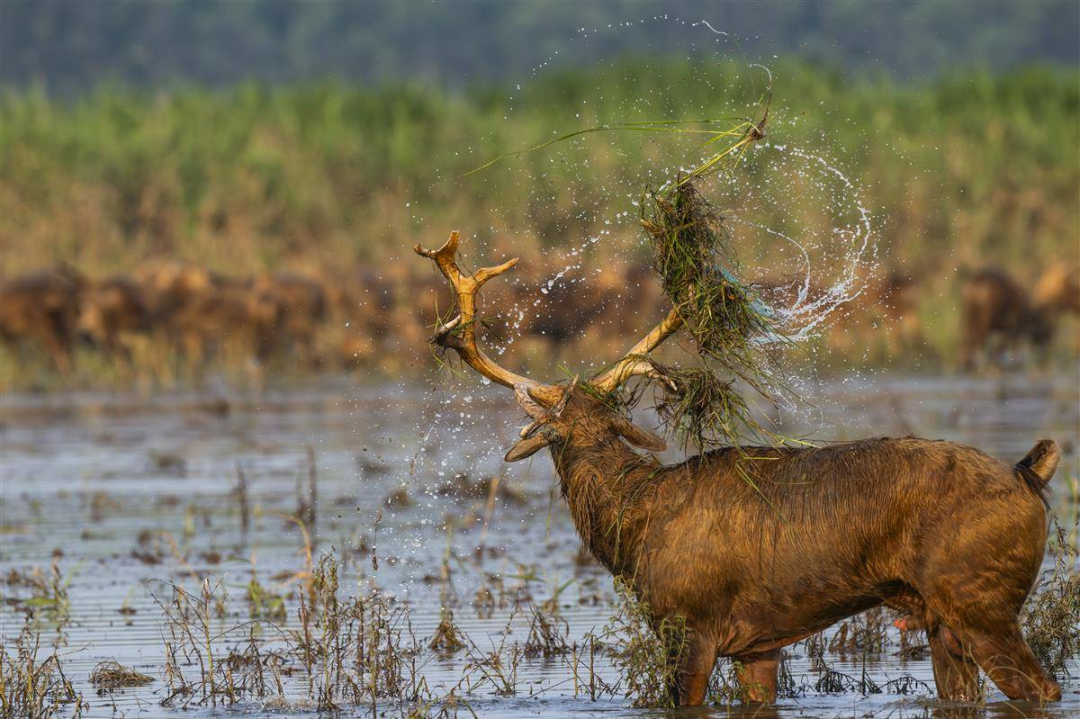
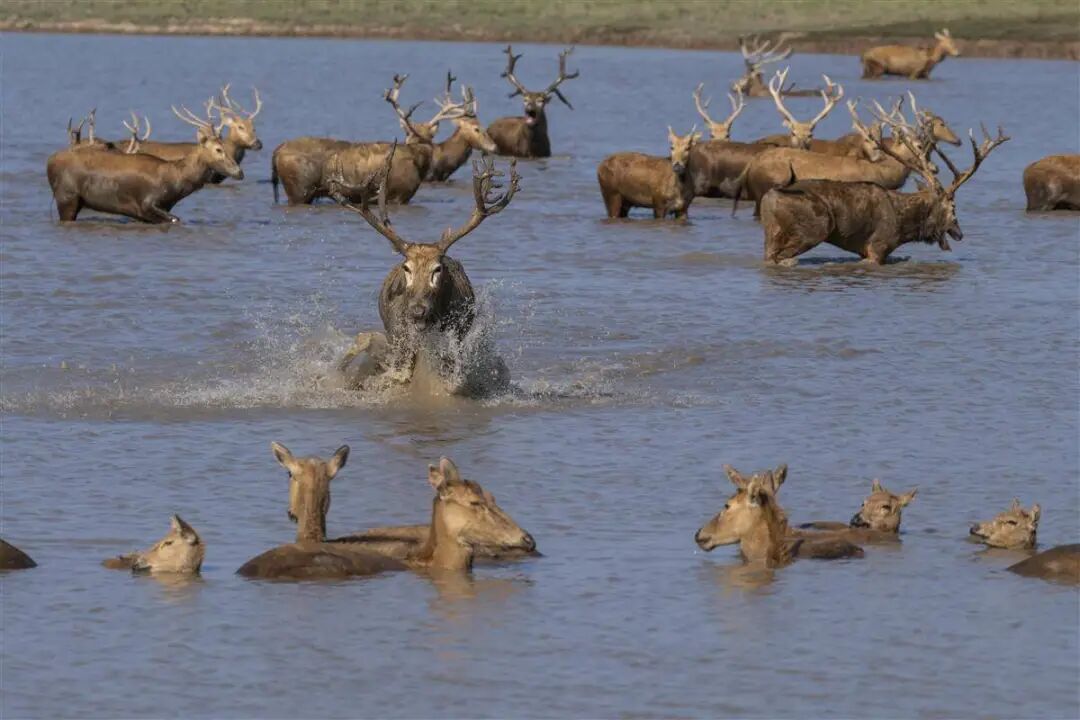
Photo by Lei Gang